Space mystery
Outer Wilds
A borrowed-looking spaceship and a handful of instruments carry an extraordinary mystery. The trick is learning when to land.
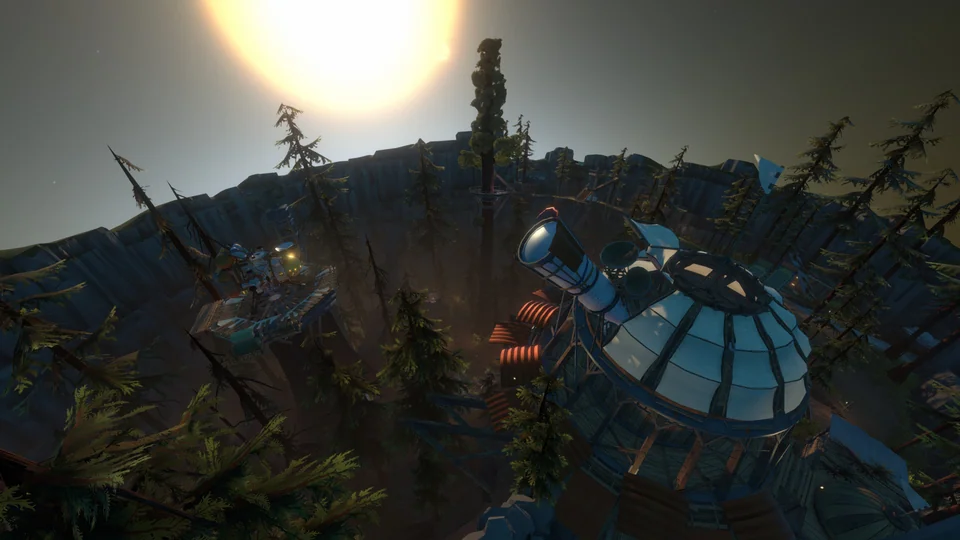
Give the flight a question
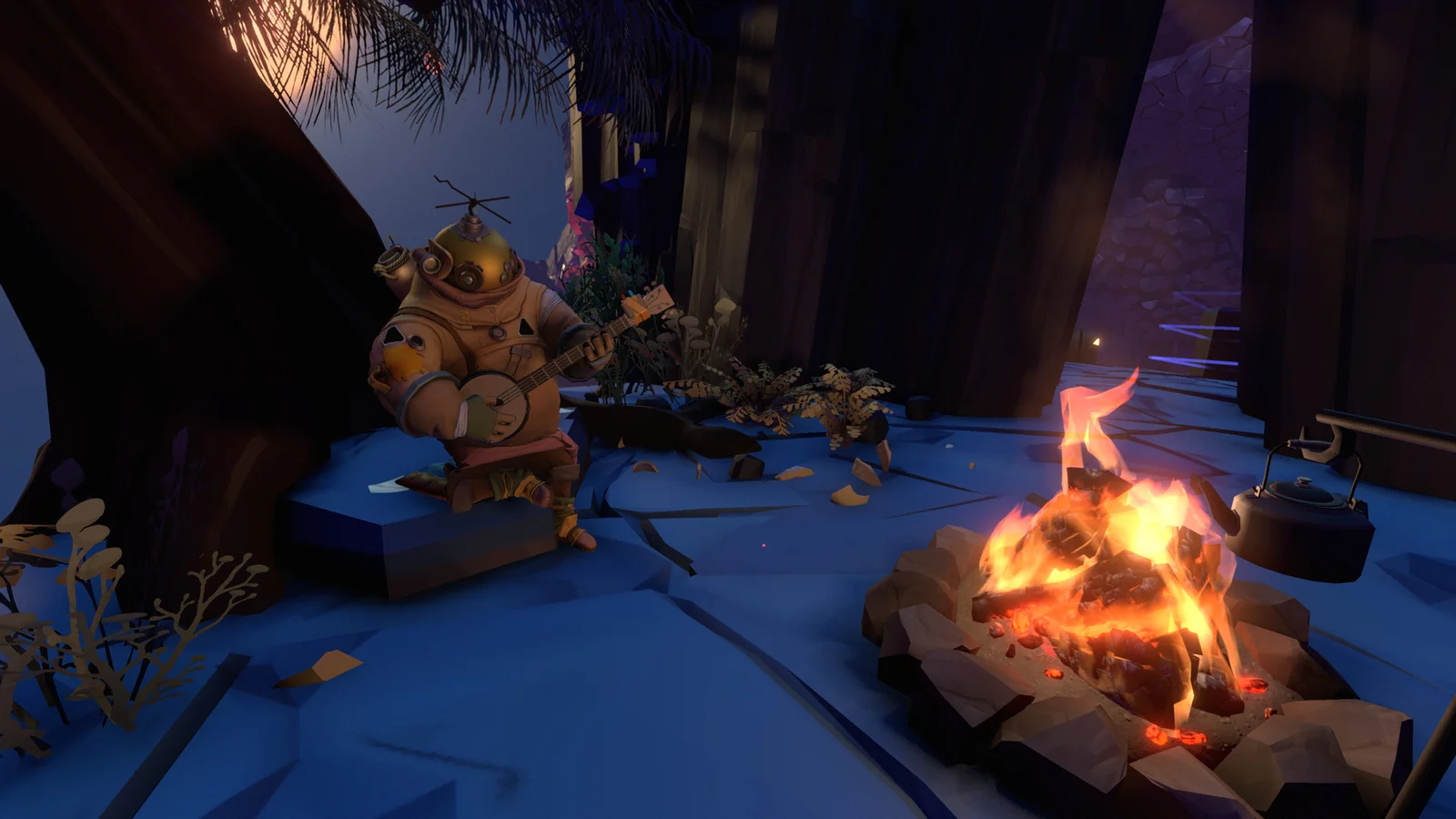
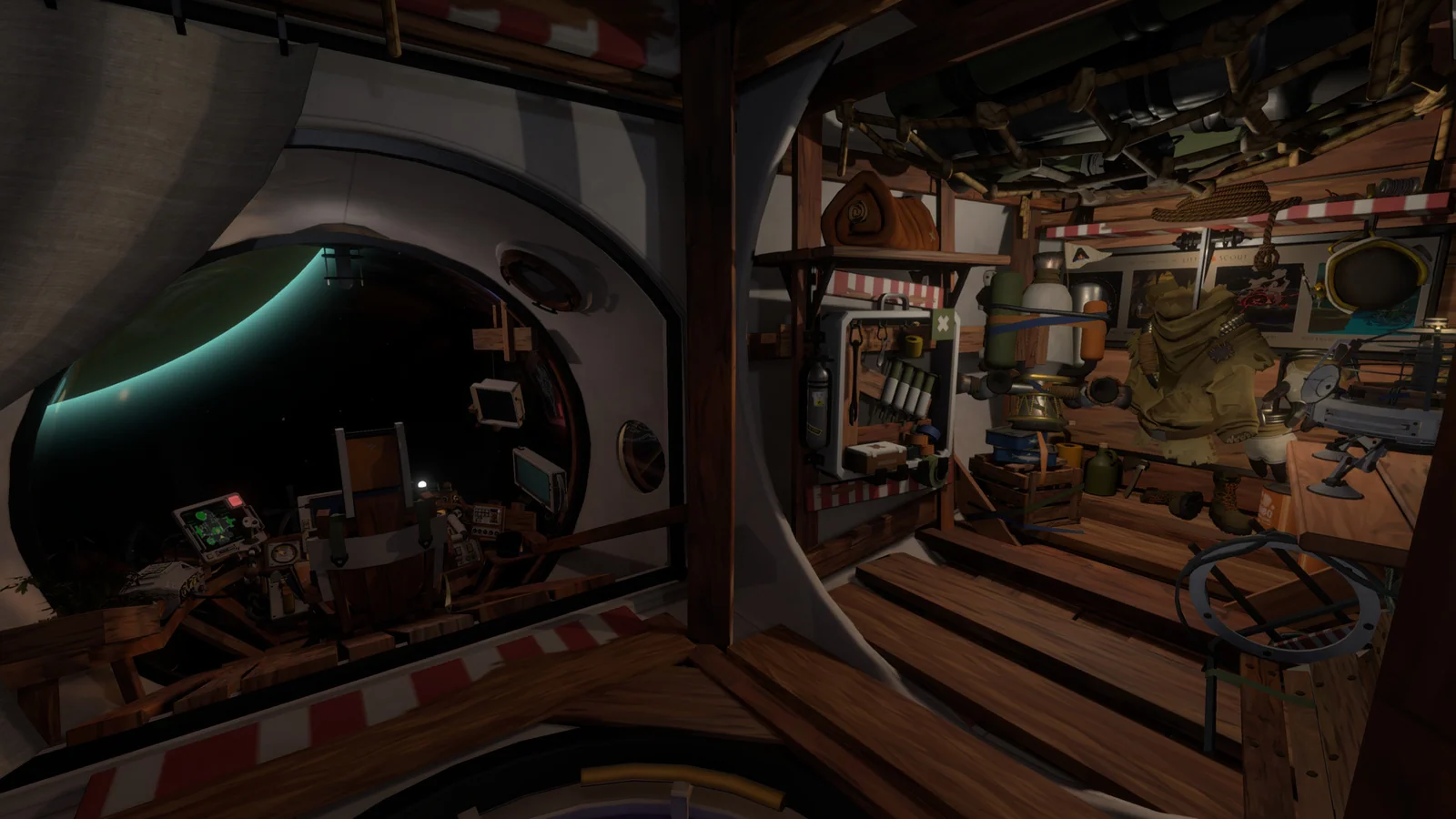
The first launch invites a familiar mistake. Pick a planet, land, and try to finish everything there. One conversation with the people of Timber Hearth should suggest a better approach. Somebody has gone looking for something. An instrument can pick up music from another world. Follow the sound for a while and there is a perfectly good reason to fly, even before the larger mystery makes much sense. The equipment feels fittingly homemade. Coming in too fast and overshooting a whole planet is an unusually persuasive lesson in how a spacecraft handles.
A ruin keeps different hours
The planets change while the pilot is doing other things. Sand works its way through passages, and pieces of terrain give way. Finding a blocked route can therefore mean arriving at an interesting time of day. On the next loop, leave the launchpad with that place in mind and see how it looked earlier. There is genuine detective work in noticing which part of a journey is worth repeating. Sometimes the useful discovery is simply a safe place to stand and watch what happens.
Read the handwriting on the wall
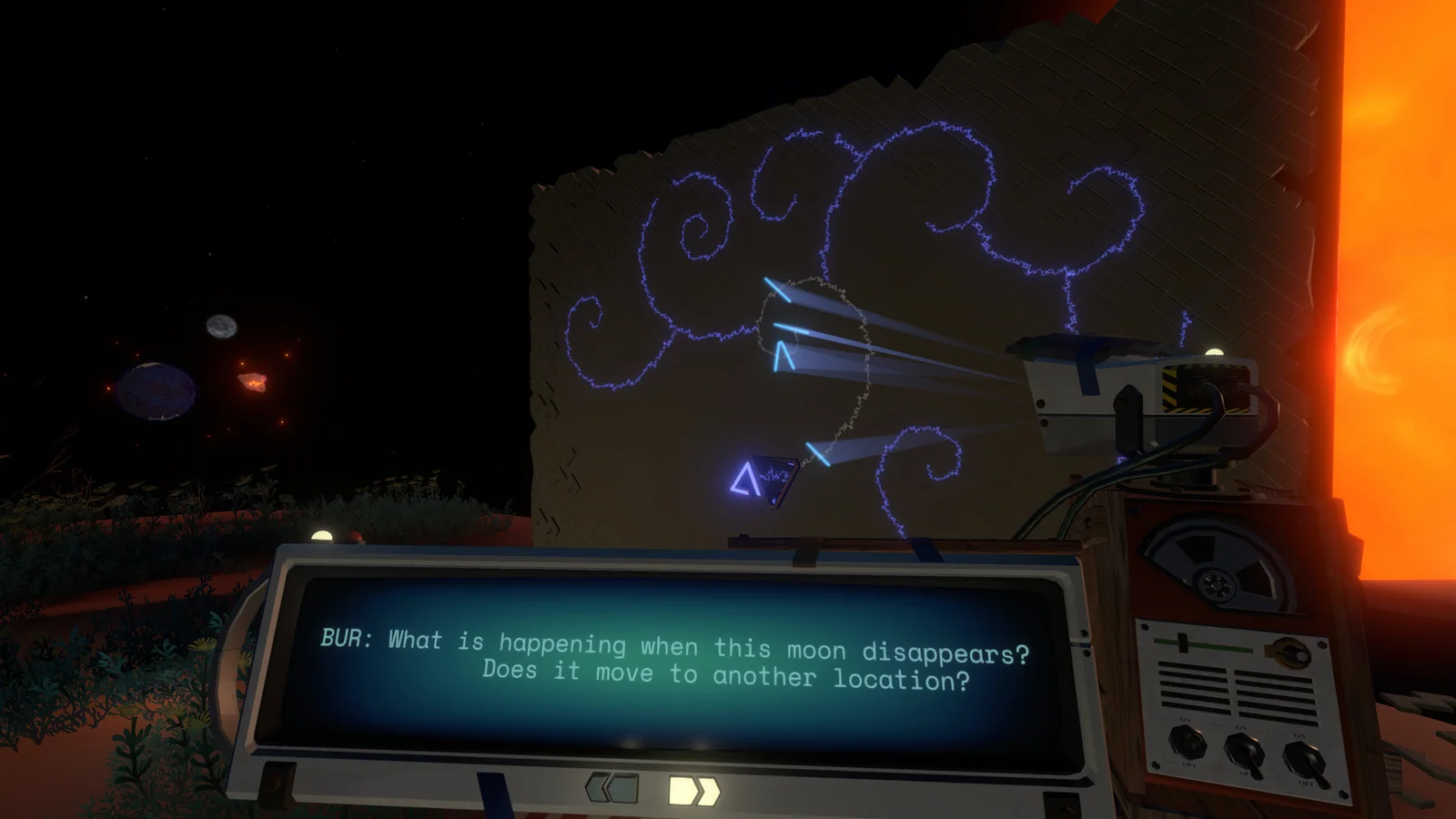
Fragments of an earlier civilisation turn up a little at a time. Their translated exchanges have the untidy warmth of people working through a problem together. A remark that looks incidental on one planet can answer a question raised on another. Back aboard the ship, the log gives those scraps somewhere to accumulate. It is worth spending a moment with it before taking off. A single unresolved connection makes a more satisfying destination than a tour of every question mark.
The price of another attempt
Landing, crossing a hazardous stretch and losing the rest of a loop to one awkward manoeuvre can hurt. The clock keeps a late discovery from turning into an unhurried reading session. That pressure suits a moving solar system, although it makes Outer Wilds a demanding choice for someone who wants to explore slowly. Let a promising idea survive the failed flight. Remembering it is usually enough to give the next launch a different shape.
Field verdict
Trace signals
A small solar system earns its scale through connections. A clue found far from home can completely change what you look for beside the launchpad.
- Travel here for
- For readers who enjoy keeping a theory in mind between sessions.
- Before you go
- Returning to a time-sensitive location may involve repeating a familiar flight.
In the field
Images courtesy of · Mobius Digital / Annapurna Interactive